„We know, that the first of May is an important issue…”
Visual Propaganda in the 1950’s and 1960’s
DOI:
https://doi.org/10.15170/PAAA.2019.06.01.06Keywords:
iconography, representation, propaganda, Communist dictatorship, photo, May Day paradeAbstract
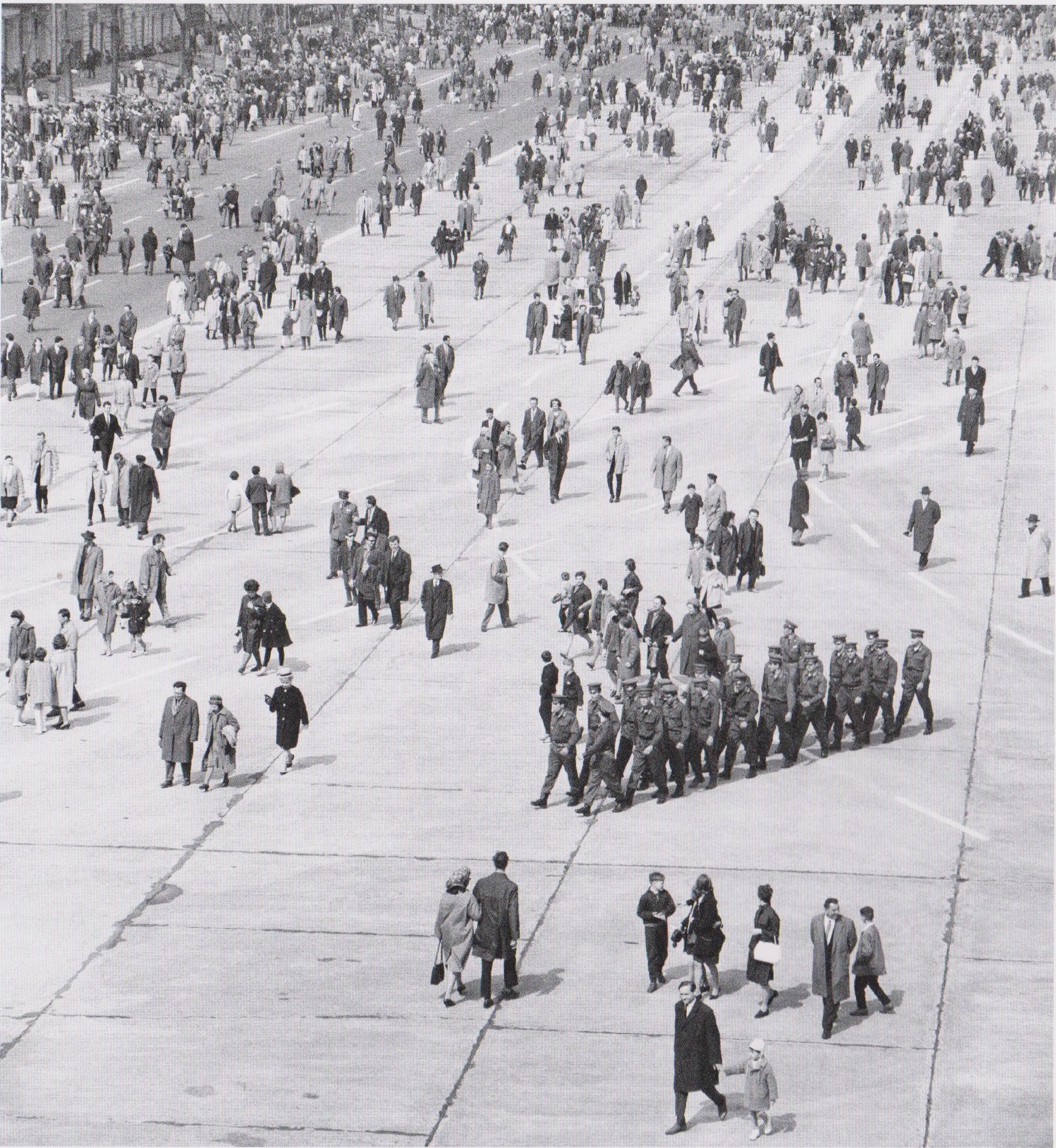
The cited quotation was heard at the session of the Temporary Party Committee of Budapest, on 18 April 1957: not surprisingly, the power chose this event as the first public demonstration, after the repression of the 1956 revolution. The May Day parades had been an important element of the visual culture of the state-party period, showing both continuity and discontinuity between the 1950’s and 1960’s in Hungary. Although the topic of the visual propaganda is a current trend in the contemporary iconography, which fits to the nature of the communist systems, it hasn’t been analysed yet. My study aims to connect a cultural practice (procession on 1 May) with the structuring space (Stalin Square, then Parade Square) and the intentions of the power. These three aspects (time, space and power) get together in the visual representations (photographs), the corpus of the analysis. The interpretation has got a narrow scope, because as the celebration and the place is an iconic one, with multiple meanings, typical (and not reflected) to our historical knowledge. Further questions emerge, like the functions of the statues, rite and celebrations etc., which belong to the fields of anthropology.
Photo: Demeter Balla, Fortepan/Hegyi Zsolt
Downloads
References
Assmann, Jan: A kulturális emlékezet. Budapest, 1999.
Ayers, Edward L.: Turning toward Place, Space, and Time. In: The Spatial Humanities: GIS and the Future of Humanities Scholarship. Eds. Bodenhamer, David J. – Corrigan, John – Harris, Trevor M. Bloomington, 2010. 1–14.
Balla Demeter: Csak képek. Szerk. Sebestyén László. A képeket válogatta, előkészítette: Hegyi Zsolt. Budapest, 2018.
Canetti, Elias: Tömeg és hatalom. Budapest, 1991.
Crowley, David – Reid, Susan E.: Socialist Spaces: Sites of Everyday Life in the Eastern Bloc. In: Socialist Spaces: Sites of Everyday Life in the Eastern Bloc. Eds. Crowley, David – Reid, Susan E. Oxford – New York, 2002. 1–22. || [DOI] https://doi.org/10.5040/9781350057692 (Speciális! Ez a fő DOI, viszont több linken keresztül lehet felkeresni a fent nevezett fejezetet a könyvből. Mindegyik link kidobja a könyvet fejezetekre lebontva. Ha kiválasztod a könyv megfelelő fejezetét, a jobb felső sarokban láthatsz egy „al-DOI-t”, ezt viszont nem lehet hiperhivatkozni. Mindegyik linknél megegyezik az „al-DOI” = a fejezet DOI-ja, ami a következő: 10.5040/9781350057692.ch-001)
Döring, Jörg – Thielmann, Tristan: Einleitung: Was lesen wir im Raume? Der Spatial Turn und das geheime Wissen der Geographen. In: Spatial Turn: das Raumparadigma in den Kultur- und Sozialwissenschaften. Hrsg. Döring, Jörg – Thielmann, Tristan. Bielefeld, 2008. 7–49. || [DOI] https://doi.org/10.1515/9783839406830-intro (Ez a tanulmány is több linken kereshető fel, viszont ebből a degruyter.com-osat javaslom, mert a másik linken a könyv második, 2009-es kiadása lelhető fel, nem a 2008-as. A DOI mindkét linken ugyanaz, úgyhogy ha hiperhivatkozod akármelyiket, mindig arra az oldalra fog vinni, ahol felsorolja a DOI-hoz tartozó két linket, vagyis, sajnos nem egyből a műhöz visz.)
Dussel, Inés: Truth in Propagandistic Images. Reflections of an Enigmatic Corpus (Westerbork, 1944). Historia y Memoria de la Educación, (2018):8. 59–95. || [WoS] https://www.webofscience.com/wos/woscc/full-record/WOS:000438535500002
Eliade, Mircea: A szent és a profán. Budapest, 1987.
Foucault, Michel: A szavak és a dolgok. Budapest, 2000.
Fowkes, Reuben: The Role of Monumental Sculpture in the Construction of Socialist Space in Stalinist Hungary. In: Socialist Spaces: Sites of Everyday Life in the Eastern Bloc. Eds. Crowley, David – Reid, Susan E. Oxford – New York, 2002. 65–84. || [DOI] https://doi.org/10.5040/9781350057692.ch-004 (több linkes, a linkeken a fent nevezett fejezetekhez kapcsolódó, nem hiperhivatkozható „al-DOI-k” megegyeznek a fő DOI-val.)
Geldern, James von: Bolshevik Festivals, 1917–1920. Berkeley – Los Angeles – Oxford, 1993. || [DOI] https://doi.org/10.1525/9780520403512
Gera Mihály: Mit kell tudni Balla Demeterről? In: Balla Demeter: Legyen meg a te akaratod. Szerk. Gera Mihály. Budapest, 1994. 149–166.
Grosvenor, Ian: Back to the future or towards a sensory history of schooling. History of Education, 41. (2012):5. 675–687. || [DOI] https://doi.org/10.1080/0046760X.2012.696149 || [WoS] https://www.webofscience.com/wos/woscc/full-record/WOS:000315207600006
Gyáni Gábor: Budapest – túl jón és rosszon. A nagyvárosi múlt mint tapasztalat. Budapest, 2008.
Jemnitz, János: Május elseje születése. Budapest, 1989.
Kenez, Peter: The birth of the propaganda state. Soviet methods of mass mobilization, 1917–1929. Cambridge, 1985. || [DOI] https://doi.org/10.1017/CBO9780511572623
Kincses Károly: Budapestről Ballául (Előszó). In: Balla Demeter: Csak képek. Szerk. Sebestyén László. A képeket válogatta, előkészítette: Hegyi Zsolt. Budapest, 2018. 5–6.
Kovács Bálint – Tóth Ildikó: „Mert Ti vagytok a jövő”. Az ausztrofasiszta hivatásrendi állam önmegjelenítése Bécs ifjai előtt az 1934. május 1-jei ünnepségen. In: Tömegek és ünnepek. Szerk. Csúri Károly – Orosz Magdolna – Szendi Zoltán. Budapest, 2009. 103–115.
Krakovskẏ, Roman: Spontánnosṫ Prvého mája zničili sovietske tanky. Piatok, 28 April 2017, 2–3.
Kruk, Sergei: Semiotics of visual iconicity in Leninist ’monumental’ propaganda. Visual Communication, 7. (2008):1. 27–56. || [DOI] https://doi.org/10.1177/1470357207084864 || [WoS] https://www.webofscience.com/wos/woscc/full-record/WOS:000258886100002
Marchart, Oliver: Representing Power. Public Space, the Artist, and the Body of the Leader. In: Ästhetik des Politischen. Hrsg. Schober, Anna. Innsbruck – Wien – Bozen, 2004. 95–110.
Margolis, Eric – Fram, Sheila: Images of Surveillance, Discipline and Punishment on the Body of the Schoolchild. History of Education, 36. (2007):2. 191–211. || [DOI] https://doi.org/10.1080/00467600601171401
McEwan, Cheryl: Using Images, Films and Photography. In: Doing Development Research. Eds. Desai, Vandana – Potter, Robert P. London – Thousand Oaks – New Delhi, 2011. 231–240. || [DOI] https://doi.org/10.4135/9781849208925.n24 (ezt majd Crossrefből nyisd meg légyszi, mert a Wordből nem tölti be a doksit.)
Nora, Pierre: Emlékezet és történelem között. Aetas, (1999):3. 142–157.
Palkó László András: Sírva vigadtunk. Valóság, 56. (2013):3. 90–111.
Pinfold, Debbie: ’Das Mündel will Vormund Sein’: The GDR State as Child. German Life and Letters, 64. (2011):2. 283–304. || [DOI] https://doi.org/10.1111/j.1468-0483.2010.01534.x || [WoS] https://www.webofscience.com/wos/woscc/full-record/WOS:000288508100007
Popkewitz, Thomas S. – Pereyra, Barry M. – Franklin, Miguel A.: History, the Problem of Knowledge, and the New Cultural History of Schooling. In: Cultural History and Education. Ed. Popkewitz, Thomas S. – Pereyra, Barry M. – Franklin, Miguel A. New York – London, 2001. 3–44.
Pótó János: Emlékművek, politika, közgondolkodás. Budapest, 1989.
Pótó János: Az emlékeztetés helyei. Emlékművek és politika. Budapest, 2003.
Rásky Béla: Az osztrák szociáldemokrata mozgalom ünnep- és ünnepélykultúrája a két világháború között. In: Tömegek és ünnepek. Szerk. Csúri Károly – Orosz Magdolna – Szendi Zoltán. Budapest, 2009. 76–91.
Rekść, Magdalena: Nostalgia for Communism in Collective Imaginations. Procedia – Social and Behavioral Sciences, 183. (2015) 105–114. || [DOI] https://doi.org/10.1016/j.sbspro.2015.04.852 || [WoS] https://www.webofscience.com/wos/alldb/full-record/WOS:000376429200014
Rolf, Malte: Soviet Mass Festivals, 1917–1991. Pittsburgh, 2013.
Rosenwein, Barbara: Worrying about Emotions in History. American Historical Review, 107. (2002):3. 821–845. || [DOI] https://doi.org/10.1086/532498 || [WoS] https://www.webofscience.com/wos/alldb/full-record/WOS:000176362800006
Szilágyi Gábor: Elemi képtan elemei. Budapest, 1999.
Takács Tibor: „Lejönni az injekcióstűről”. Információs Társadalom, (2014):4. 95–112.
Thompson, Paul – Bornat, Joanna: The Voice of the Past. Oxford, 2017.
Tóth Szergej: Nyelv, kép, hatalom. Szeged, 2011.
Trower, Shelley (ed.): Place, Writing, and Voice in Oral History. New York, 2011. || [DOI] https://doi.org/10.1057/9780230339774
Vörös, Boldizsár: Különböző politikai hatalmak – ugyanabban a fővárosban. Szimbolikus térfoglalási akciók Budapesten 1918–1919-ben. In: Tömegek és ünnepek. Szerk. Csúri Károly – Orosz Magdolna – Szendi Zoltán. Budapest, 2009. 15–31.
Voigt Vilmos: A május elsejei felvonulás társadalmi szemiotikája. In: A kezdetektől a máig. A modern magyar szemiotika olvasókönyve. Szerk. Voigt Vilmos – Balázs Géza. Budapest, 2003. 268–280.
Downloads
Published
How to Cite
Issue
Section
License

This work is licensed under a Creative Commons Attribution-NonCommercial-NoDerivatives 4.0 International License.