Changes of secondary teacher training system in the Hungarian capital during the Great War and in the time period afterwards
DOI:
https://doi.org/10.15170/PAAA.2018.05.02.05Keywords:
history of education, professionalization, teacher training, Eötvös József CollegiumAbstract
In my paper, I examined the secondary teacher training system at the University of Budapest between 1914 and 1924. My research is a qualitative examination, in which during the synthesis of the hermeneutical document analysis of archival sources and content analysis of secondary literature I used the theory of professionalization to interpret the data gained from sources. Furthermore, I also acquired the Maurice Halbwachs and Pierre Nora created and implemented recollection, national tradition and places of memory (lieux de mémoire) notions to explore the “recollection layers” of Eötvös Collegium as a national historical site.
The main result of this paper is the summary of the relationship between the Ministry of Religion and Public Education and the institutions of secondary teacher training (Secondary Teacher Training Institution, Secondary Teacher Examination Committee and Baron Eötvös József Collegium). Till 1918, this relationship was based on cooperation within the framework of bureaucratic regulation tools of the state. The ministry regulated the affairs of secondary teacher training (content and organization of the teacher training system) with the active participation of the professional elite. Nevertheless, the financial conditions of the teacher training system were very limited in comparison with other professions. Furthermore, the institutional system of teacher training was overburdened by the combination of lack of financial support and the high inflation ratio, incapability of handling with the influx of admitted students after the war and reforms of the early 1920s.
Moreover, the relationship between the state and teacher training instructions became asymmetric after 1918 as a result of ideological transformation of professional training. Political changes also affected the staff of the professionals. The overrepresentation of state power did not fade away after 1919. Although the Ministry of Religion and Public Education relied on the suggestions of professional elite during the revision of Teacher Examination Codex and the formulation of new secondary teacher training law, the state wanted to have a direct influence over admission of students, ideological determination of professional training and even in symbolical issues.
The Baron Eötvös József Collegium was part of the secondary teacher training system as an institution, which was founded on the principle of ‘scholar teacher’. The Collegium was reckoned as an important secondary teacher training institute, which was expressed by the fact that direct regulations of different political systems affected the operation of the institute on regular basis. Some of these measures were symbolic, for instance the nomination of the supreme leader of the Collegium, but others intruded into the inner life of the boarding school and influenced the training system of the institute. As a historical memorial site, it refers not only to recollection of the scientific achievements of former members or teacher training conception of the area of the Austro-Hungarian Monarchy but it also has a reference to the Hungarian secondary teacher training system before 1949. This reference is an additional “recollection layer” which enables researchers to explore the challenges of the operation of the teacher training system. Tellingly, these challenges were often results of turbulent political changes.
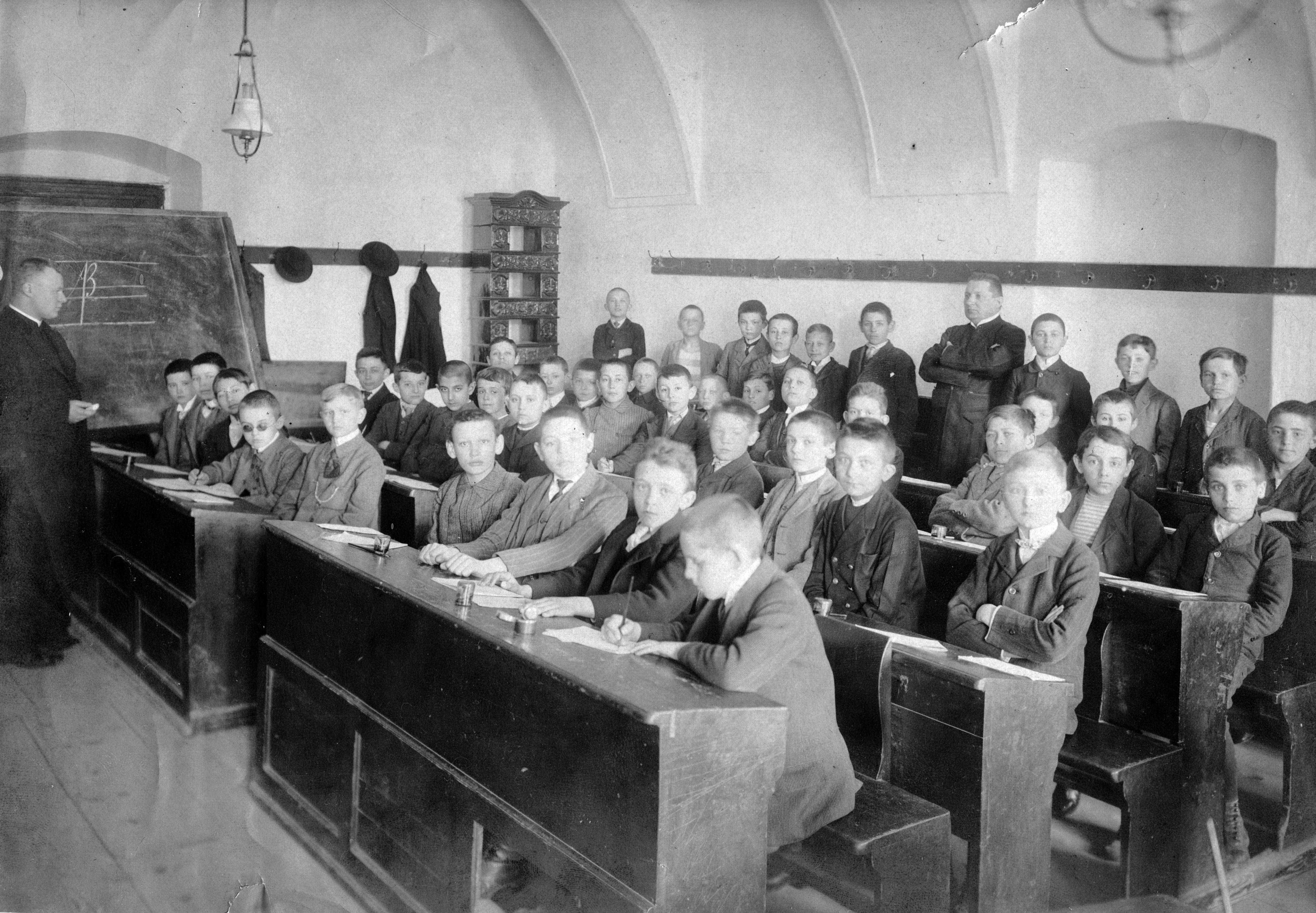
Photo: Fortepan / Cholnoky Tamás
Downloads
References
Bartal Antal: A Pesti m. Kir. tudomány-egyetem bölcsészeti kara mellett középtanodai tanárjelöltek számára felállított állami tanárképezdének története. In: A M. Kir. Középtanodai Tanárképezde értesítője az 1870/1871–1872/1873. évi időszakról. Szerk. Bartal Antal. Pest, 1873. 3–21.
Bartha Eszter: A társadalmi osztályok pszichológiája. Kollektív tudat, szükségletek és az osztályfogalom Maurice Halbwachs munkájában. Fordulat 2. (2009):5. 128–156.
Beöthy Zsolt: Az egyetemi tanárképzés kérdéséhez. Az egyetemi seminariumok. Ösztöndíjak és ellátás. A tanárképzőintézet átalakítása. Budapest, 1894.
Féja Géza: Szabadcsapat. Életregény. Budapest, 1965.
Friedson, E.: Are professions necessary? In: The authority of experts. Studies in history and theory. Ed. Haskell, T. L. Bloomington, 1984. 3–27.
Garai Imre: A tanári elitképzés műhelye. A Báró Eötvös József Collegium története 1895–1950. Budapest, 2016.
Garai Imre: Tanárképzés a Gellért-hegy déli oldalán egykor és ma. (http://honlap.eotvos.elte.hu/fooldal/tortenet/) [2018.01.13.]
Garai, Imre – Németh, András: Construction of the national state and the institutionalization processes of the modern Hungarian secondary school teacher training system. Espacio, Tiempo y Educación, 5. (2018):1. 219–232. || [DOI] https://doi.org/10.14516/ete.121 || [WoS] https://www.webofscience.com/wos/woscc/full-record/WOS:000437520200012
Győri Dezső: A nagy érettségi. Regényes visszaemlékezések. Budapest, 1960.
Gyurgyák János: A zsidókérdés Magyarországon. Politikai eszmetörténet. Budapest, 2001.
Heidenreich, M.: Berufskonstruktion und Professionalisierung. Erträgen soziologischen Forschung In: Professionalisierung pädagogischer Berufe im historischen Prozeß. Hrsg. Apel, H. J. – Horn, K.-P. – Lundgreen, P. et alii. Bad Heilbrunn, 1999. 35–58.
Jeismann, K-E.: Zur Professionalisierung der Gymnasiallehrer in 19. Jahrhundert. In: Professionalisierung pädagogischer Berufe im historischen Prozeß. Hrsg. Apel, H. J. – Horn, K.-P. – Lundgreen, P. et alii. Bad Heilbrunn, 1999. 59–79.
Karády Viktor: Allogén elitek a modern magyar nemzetállamban. Történelmi-szociológiai tanulmányok. [Budapest], 2012.
Kármán Mór: A tanárképzés és az egyetemi oktatás. Pedagógiai tanulmány. Budapest, 1895.
Keller Márkus: A tanárok helye. A középiskolai tanárság professzionalizációja a 19. század második felében, magyar–porosz összehasonlításban. Budapest, 2010.
Kéri Katalin: Bevezetés a neveléstörténeti kutatások módszertanába. Budapest, 2001. (Kutatás-módszertani Kiskönyvtár)
Kiss Istvánné: A Trefort utcai „minta”. Az ELTE Ságvári Endre Gyakorlóiskola története. Budapest, 1987.
Kornis Gyula: Középiskoláink reformja és a főiskolák. In: Kultúra és politika. Tanulmányok. Szerk. Kornis Gyula. Budapest, 1928. 91–103.
Kósa László: Dokumentumok az Eötvös József Collegium történetéből. In: Szabadon szolgál a szellem. Tanulmányok és dokumentumok a száz esztendeje alapított Eötvös József Collegium történetéből. Szerk. Kósa László. Budapest, 1995. 155–231.
Kövér György: Magyarország társadalomtörténete a reformkortól az első világháborúig. In: Magyarország társadalomtörténete a reformkortól a második világháborúig. Szerk. Gyáni Gábor – Kövér György. Budapest, 2006. 11–186.
Ladányi Andor: A középiskolai tanárképzés története. Budapest, 2008.
Larson, M. S.: The rise of professionalism. A sociological study. Berkeley – Los Angeles – London, 1977. || [DOI] https://doi.org/10.1525/9780520323070
Lundgreen, P.: Berufskonstruktion und Professionalisierung in historischer Perspektive. In: Professionalisierung pädagogischer Berufe im historischen Prozess. Hrsg. Apel, H. J. – Horn, K.-P. – Lundgreen, P. et alii. Bad Heilbrunn, 1999. 19–34.
McClelland, C. E.: The German experience of professionalization. Modern learned professions and their organizations from the early nineteenth century to the Hitler era. Cambridge – New York – Sydney, 1991. || [DOI] https://doi.org/10.1017/CBO9780511528910
Nagy Péter Tibor: Az oktatásügy második államosítása. Budapest, 1992.
Németh András: A magyar pedagógia tudománytörténete. Nemzetközi tudományfejlődési és recepciós hatások, nemzeti sajátosságok. Budapest, 2005.
Németh András: A magyar pedagógus professzió kialakulásának előtörténete. A 18. században és a 19. század első felében. Pedagógusképzés 32. (2005):1. 17–32.
Németh András: Magyar pedagógusképzés és pedagógus szakmai tudásformák I. 1775–1945. Budapest, 2012. (https://edit.elte.hu/xmlui/bitstream/handle/10831/32150/pedagoguskepzesne-meth2011_korr1_120124_JAV.pdf?sequence=1&isAllowed=y) [2018.01.15.]
Nora, Pierre: Emlékezet és történelem között. Válogatott tanulmányok. Szerk. K. Horváth Zsolt. Budapest, 2009.
Orosz Gábor: A debreceni Országos Magyar királyi Középiskolai Tanárképző Intézet. Debrecen, [Sine anno]. Kézirat.
Romsics Ignác: Clio bűvöletében. Magyar történetírás a 19–20. században – nemzetközi kitekintéssel. Budapest, 2011.
Ruane, C.: Gender, class and the professionalization of Russian city teachers, 1860–1914. Pittsburgh – London, 1994. || [DOI] https://doi.org/10.2307/jj.490858
Pukánszky Béla: A tanárképző intézet szerepének alakulása a magyarországi tanárképzés történetében. Pedagógusképzés, 39–40. (2013):10–11. 73–91. || [DOI] https://doi.org/10.37205/TEL-hun.2012-2013.06
Szabolcs Éva: Deduktív (Analitikus) jellegű kutatások. In: Bevezetés a pedagógiai kutatás módszereibe. Szerk. Falus Iván et al. Budapest, 2011. 84–94.
Szabó Zoltán András: A trifurkáló fiúközépiskola-rendszer kialakulása Magyarországon (1921–1924). PhD-disszertáció. Budapest, 2017. (http://ppk.elte.hu/file/szabo_zoltan_andras_disszertaci.pdf) [2018.02.05.]
A budapesti m. kir. középiskolai tanárképzőintézet Szervezeti Szabályzata. Kiadatott a vallás- és közoktatásügyi miniszter 1899. évi 38640. számú rendeletével. Budapest, 1899.
White, H.: Metatörténelem. A 19. századi Európa történelmi képzelőereje. In: Történelemelmélet. II. kötet. Szerk. Gyurgyák János – Kisantal Tamás. Budapest, 2006. 863–898.
Downloads
Published
How to Cite
Issue
Section
License

This work is licensed under a Creative Commons Attribution-NonCommercial-NoDerivatives 4.0 International License.