Az egri jogi oktatás térbeli és társadalmi dimenzióinak vizsgálata 1874 és 1890 között
DOI:
https://doi.org/10.15170/PAAA.2026.13.01.02Kulcsszavak:
Jogakadémia, Eger, államtudományi államvizsga, jogtudományi államvizsga, lakhely, foglalkozás, társadalmi háttérAbsztrakt
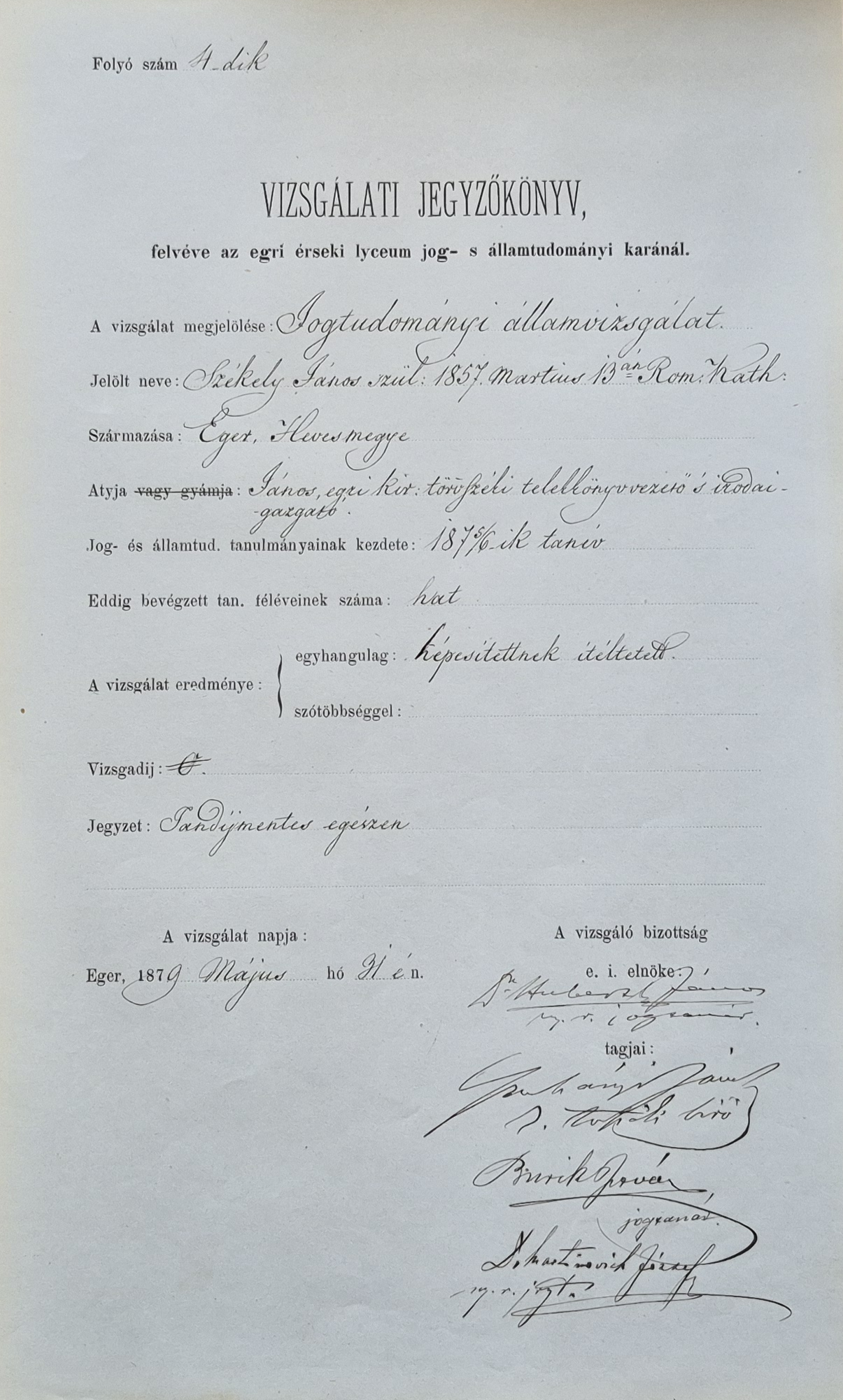
A tanulmányban az 1874 és 1890 közötti időszakot vizsgálom meg. 1874-ben alakították át a jogakadémiai képzési struktúrát, bevezették a 3 évfolyamos képzést, és az államtudományi- és jogtudományi államvizsgát. Ez az átalakítás elválasztotta az egyetemi jogi oktatást és a jogakadémiai képzést. A jogakadémiák elsődleges feladata az állami apparátus működéséhez szükséges jogi ismeretekkel rendelkező hivatalnokok képzése lett. Mind a két államvizsga, más-más hivatalnoki pozíciók betöltésére képesített, ezért az államvizsgát tettek társadalmi hátterének vizsgálata tovább bővítheti az eddigi ismereteket. Az oktatás és a tudomány társadalmi tereit az egri jogakadémián két szempont szerint vizsgálom meg. Az elsőkörben a fent megjelölt időszakban megvizsgálom a jogakadémia tanulóinak lakóhelyeit. Azt, hogy mely megyék adták az egri jogakadémia beiskolázási körzetét, valamint azt, hogy mennyire domináns a városi diákok szerepe a községi lakóhelyekről érkezettekkel szemben. Ezzel a témával már foglalkoztam egy korábbi tanulmányomban, de most két évvel kibővítve vizsgálom meg a kérdést. Ezzel is beemelve a tér és az oktatás dimenzióját a vizsgálatba, amit aztán tovább viszek a tanulmány következő részében. Itt már szűkítem a vizsgálatot, mert csak az államtudományi- és jogtudományi államvizsgát tett hallgatókkal foglalkozom. Ennek forrásbázisát az iskolai anyakönyvek és az államtudományi- és jogtudomány államvizsga jegyzőkönyvek adják. A vizsgálat ezen szakaszában kiemelten fontos, hogy milyen társadalmi háttérrel rendelkeztek a jogakadémiát elvégzett diákok, ezt jól mutatja a képzést lezáró államvizsgázók szülőjének vagy gondviselőjének a foglalkozása. Kérdés, hogy milyen arányban voltak azok a hallgatók, akiknek az apja vagy gondviselője is felsőfokú végzettséggel rendelkezett, milyen százalékban képviseltették magukat a kereskedők gyermekei és a magánzók gyerekei, valamint más társadalmi csoportok, akiknek a vizsgálatához a korabeli népszámlálások kategóriáit fogom használni. Így kimutathatóvá válik, hogy egy olyan korszakban, amikor a jogi végzettség presztízse a társadalomban nagyon magas volt, az egri jogakadémia mennyire volt színtere a társadalmi reprodukciónak és milyen arányban nyújtott lehetőséget a társadalmi mobilitásra.
Letöltések
Hivatkozások
Bácskai Vera: Városok Magyarországon az iparosodás előtt. Budapest, 2002.
Bácskai Vera – Nagy Lajos: Piackörzetek, piacközpontok és városok Magyarországon 1828-ban. Budapest, 1984.
Beluszky Pál: Magyar városhálózat a 20. század elején. Budapest – Pécs, 2005.
Beluszky Pál: Az (egykori) szabad királyi városok a dualizmuskori városhálózatban. In. Urbs – Magyar várostörténeti évkönyv 1. Főszerk. Á. Varga László. Budapest 2006. 269–288.
Berecz Anita: Az egri képviselőtestület társadalmi összetétele a dualizmus korában. In. AGRIA L. Szerk. H. Szilasi Ágota – Várkonyi Péter – Bujdosné Pap Györgyi – Császi Irén. Eger, 2017. 475–490.
Bujdosné Pap Györgyi: Az Egri Érseki Jogakadémia. In: Az egri domus universitatis és líceum. Oktatás, tudomány, művészet 1763–2013. Szerk. Petercsák Tivadar. Eger, 2013. 16 –190.
Csizmadia Andor: A magyar közigazgatás fejlődése a XVIII. századtól a tanácsrendszer létrejöttéig. Budapest, 1976.
Gyáni Gábor – Kövér György: Magyarország társadalomtörténete a reformkortól a második világháborúig. Budapest, 2006.
Gyimes Sándor: A városok a feudalizmusból a kapitalizmusba való átmenet időszakában. (Funkcionális és strukturális változások Nyugat- és Közép-Kelet-Európa városhálózatában, különös tekintettel Magyarországra). Budapest, 1975.
Hadobás Eszter – Szögi László: Az egri felsőoktatás intézményeinek hallgatói II. 1850–1918. Budapest – Eger, 2024. 41–192.
Ivancsics Imre: Az önkormányzatokról az önkormányzatokig adalékok a helyi közigazgatás elmúlt száz évének történetéhez. In: A magyar államiság első ezer éve. Szerk. Font Márta – Kajtár István. Pécs, 2000. 219-238.
Jusztinger János: Az Egri Érseki Joglíceum (1740–1949). In: A Pécsi Püspöki Joglíceum emlékezete 1833–1923. Szerk. Kajtár István – Pohánka Éva. Pécs, 2009. 49–64.
Kajtár István: Községi önkormányzat és modernizáció a 19. századi Közép- és Kelet-Európában. JURA. A Pécsi Tudományegyetem Állam- és Jogtudományi Karának tudományos lapja 7. (2001):2. 42–49.
Kovács I. Gábor – Kende Gábor: Egyetemi tanárok rekrutációja a két világháború közötti Magyarországon. In: Zsombékok. Középosztályok és iskoláztatás Magyarországon. Szerk. Kövér György. Budapest, 2006. 417–506.
Magyary Zoltán: Jogakadémiák. In: A Magyar Tudománypolitika Alapvetése. Szerk. Magyary Zoltán. Budapest, 1927. 218–220.
Mazsu János: Az értelmiségbe irányuló mobilitás Magyarországon az I. világháború előtti félszázadban. In. Társadalomtörténeti módszerek és forrástípusok. Rendi társadalom – polgári társadalom 1. Salgótarján, Nógrád Megyei Levéltár. Szerk. Á. Varga László. Salgótarján, 1987. 453-462.
Mezey Barna: A jogakadémiák 1874. évi reformja. In: Jogászképzés a magyar felsőoktatás rendszerében. Szerk. Kovács Kálmán. Budapest, 1984. 103–119. (Jogtörténeti értekezések 14.)
Mezey Barna: Egyetemek és jogakadémiák. In: Győri tanulmányok tudományos szemle 20. Szerk. Dominkovits Péter – Horváth József – Mezey Barna. Győr, 1998. 7–17.
Mezey Barna: A jogakadémiák a jogászképzés történetében. In: A Pécsi Püspöki Joglyceum emlékezete 1833–1923. Szerk. Kajtár István – Pohánka Éva. Pécs, 2009. 17–36.
Nagy József: Az Egri jogakadémiai képzés fény és árnyoldalai. In: Libelli Historiae Accademiae Agriensis. Adatok és adalékok a főiskola történetéhez, 2010–2012. Szerk. Nagy József. Eger, 2012. 85–106.
Ráth Zoltán: A jogi szakoktatás reformja a jogakadémiákon. Jogtudományi közlöny. Hetilap a jog- és államtudományok köréből. 32. (1897):8. 57–60.
Sasfi Csaba: A nagykanizsai és a keszthelyi gimnázium vonzáskörzete és a diákok lakóhelyi koncentrációja 1808 és 1848 között. In: Iskola és társadalom. A Zalaegerszegen 1996. szeptember 5–6-án rendezett konferencia előadásai. Szerk. Sasfi Csaba. Zalaegerszeg, 1997. 131–163. (Zalai gyűjtemény 41.)
Sasfi Csaba: Érdemelv és mobilitás – ígérvények és esélyek: Az iskolázás egy történeti modellje. In. Universitas – Historia: Tanulmányok a 70 éves Szögi László tiszteletére. Szerk. Draskóczy István – Varga Júlia – Zsidi Vilmos Budapest 2018. 391-398.
Udvardy László: Az Egri Érseki Joglíceum története (1740–1896). Eger, 1898.
Downloads
Megjelent
Hogyan kell idézni
Folyóirat szám
Rovat
Categories
License
Copyright (c) 2026 Eszter Hadobás

This work is licensed under a Creative Commons Attribution-NonCommercial-NoDerivatives 4.0 International License.