The venues of medical education as spaces of representation of medicine in Pest until the construction of the clinical block at Üllői Road
DOI:
https://doi.org/10.15170/PAAA.2026.13.01.06Keywords:
Pest, Budapest, Faculty of Medicine, Jesuit House, Kunewalder House, 19th century, Botanical Garden, Rochus HospitalAbstract
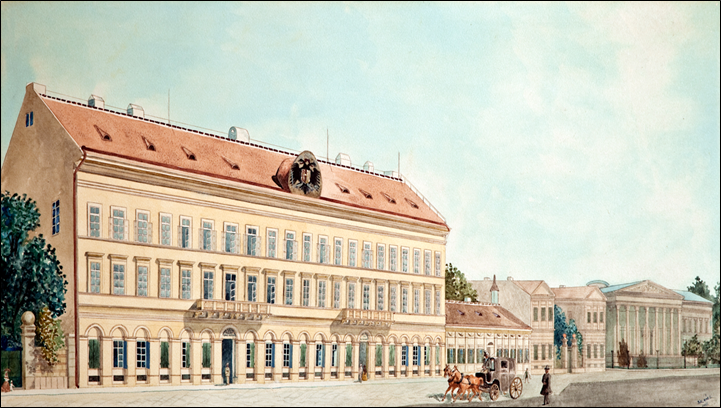
For the medical faculty, the century following its move to Pest in 1784 was a challenging period. The city's rapid development began at the end of the 18th century, but the possibilities for medical education were determined by the cramped conditions of the downtown "Jesuit House", which became unsuitable for education due to the increasing number of departments and the growing number of students. All this was aggravated by the failure of the plans regarding the city's Rochus Hospital. The Kunewalder House was spacious, but due to its surroundings it proved unsuitable for the permanent accommodation of the surgical and obstetrics clinics. After decades of disputes between the city government and the university, the final solution was only brought about by the developments following the Austro-Hungarian Compromise. The construction of the (inner) clinical block on Üllői Street marked a turning point in medical education and enabled the final elimination of outdated locations.
Downloads
Downloads
Published
How to Cite
Issue
Section
Categories
License
Copyright (c) 2026 Katalin Simon

This work is licensed under a Creative Commons Attribution-NonCommercial-NoDerivatives 4.0 International License.