Tunisia: Layman Dictatorship, Free Elections, Islamic Democracy
Keywords:
Islamism, Populism, Salafism, Islamic democracyAbstract
Here is the English translation of the provided Hungarian text:
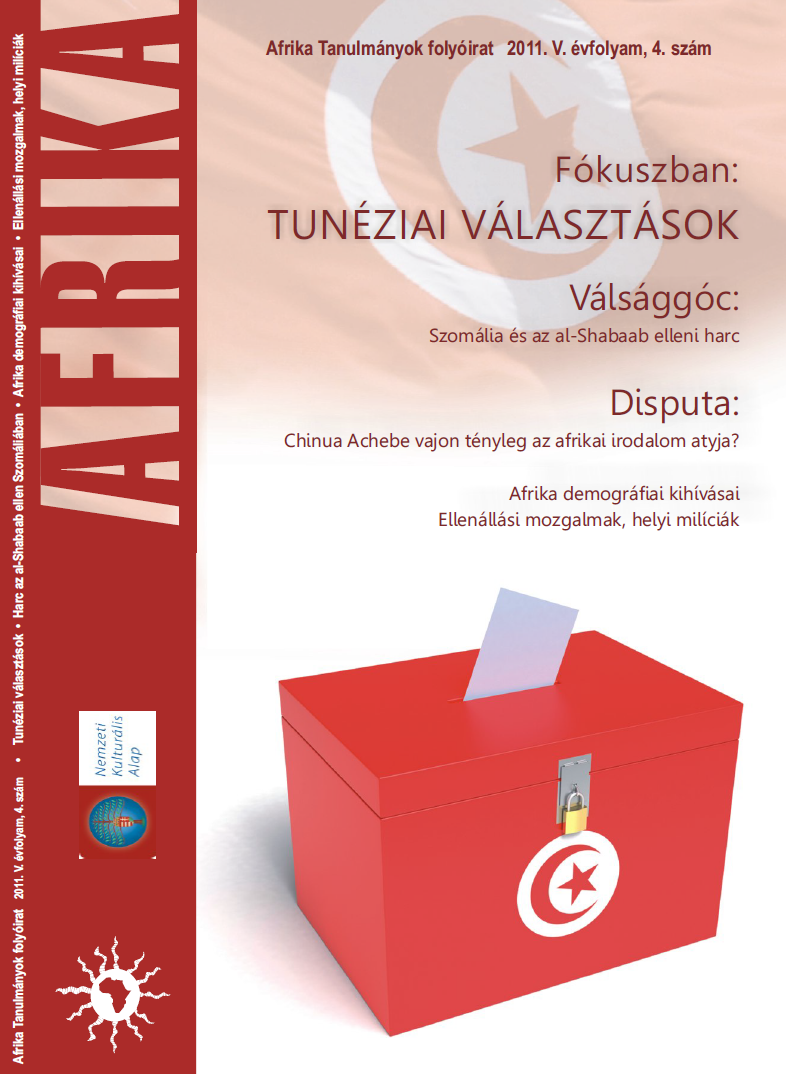
In 2011, elections are taking place in numerous African countries, which are either boycotted in advance by opposition forces or – rightly or wrongly – the results are contested to varying degrees, citing electoral fraud, or are accepted in accordance with the democratic rules of political alternation. Although events related to elections still planned for this year (e.g., in the Democratic Republic of the Congo) may feature prominently in international media headlines for days, none of these elections – including those already held – attain the same significance as the elections resulting from the changes of the Arab Spring. This series was opened by the Tunisian Constituent Assembly elections, originally scheduled for July 24 but actually held on October 23 (October 20–22 for Tunisians living abroad).
Downloads
Published
How to Cite
Issue
Section
License

This work is licensed under a Creative Commons Attribution-NonCommercial-NoDerivatives 4.0 International License.