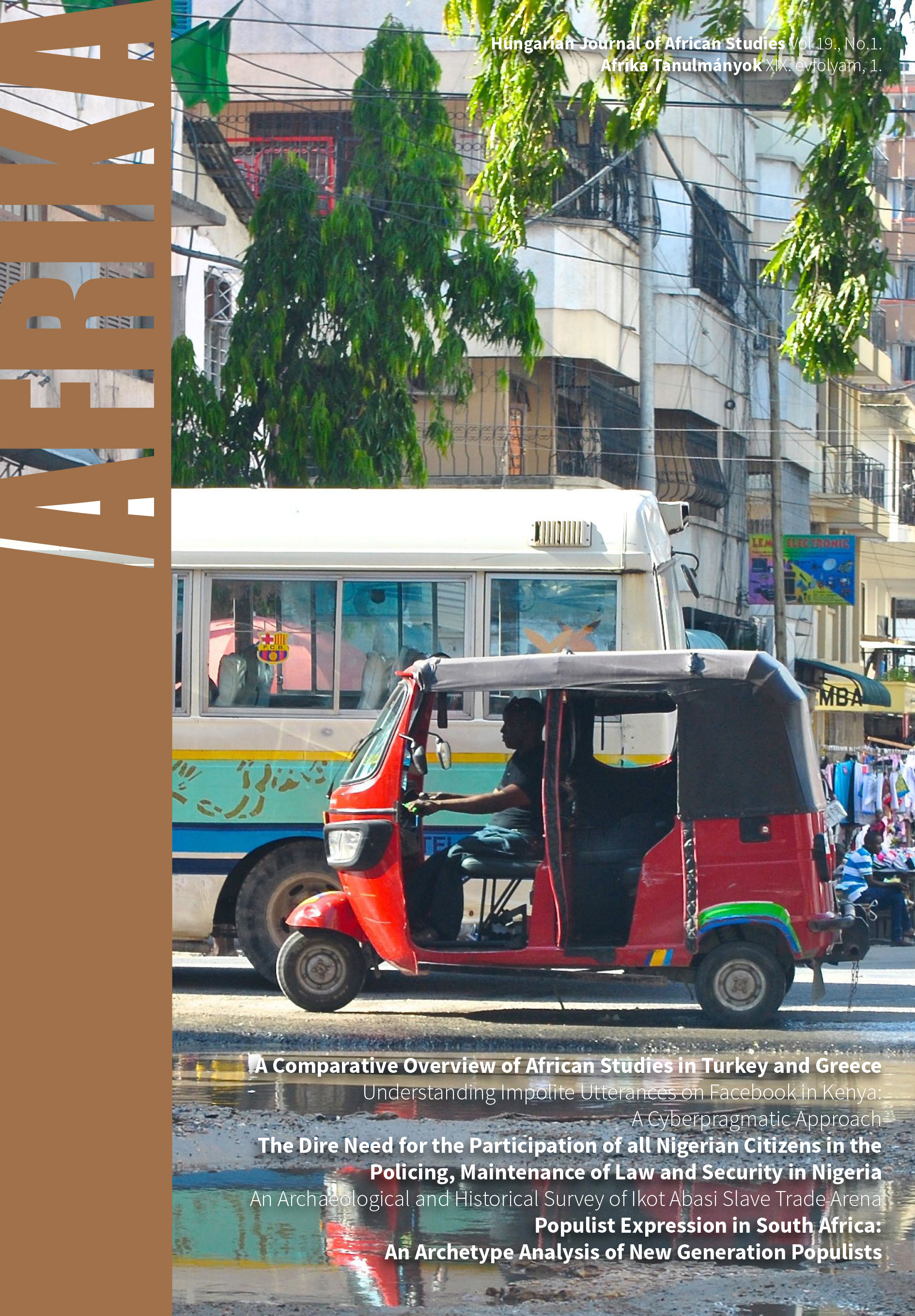
A Facebookon megjelenő udvariatlan megnyilvánulások értelmezése Kenyában: cyberpragmatikus megközelítés
DOI:
https://doi.org/10.15170/AT.2025.19.1.2Kulcsszavak:
cyberzaklatás, udvariatlanság, ellenséges magatartás, cyberpragmatika, KenyaAbsztrakt
Ez a tanulmány azt vizsgálja, hogy a kenyaiak milyen pragmatikus stratégiákat alkalmaznak a Facebookon megjelenő udvariatlan megnyilvánulások megértéséhez. A kutatások szerint az udvariatlanság gyakori jelenség a mai társadalmainkban. Például a politikai életben a kenyai politikusok pozitív és negatív ún. arcfenyegető aktusokat (FTA) egyaránt alkalmaznak céljaik elérése érdekében. Ez rávilágít a nyelvhasználat fontosságára a kommunikációban. Emellett a parlamenti képviselők pozitív és negatív udvariassági stratégiákat egyaránt alkalmaznak a nemzetgyűlésen belüli hatékony kommunikáció érdekében. Ez a megközelítés segít enyhíteni az arcvesztés veszélyét, és hangsúlyozza a nyelvi udvariasság fontosságát a harmonikus interakciók előmozdításában. A kutatások azt mutatják, hogy az online kommunikációban részt vevő egyének hajlamosabbak agresszívabb és ellenségesebb viselkedést tanúsítani. Az online platformok gyakran lehetőséget nyújtanak a felhasználóknak, hogy kellemetlen módon viselkedjenek. Az egyetemisták körében előforduló cyberzaklatás esetében olyan stratégiákat alkalmaznak a probléma leküzdésére, mint a bántalmazók blokkolása, jogi lépések megtétele és az online biztonság fokozása. Ezek a proaktív intézkedések a digitális interakciókban gyakran előforduló udvariatlanság kezelésére irányulnak, rámutatva, hogy az online kommunikációban általában magasabb szintű udvariatlanság figyelhető meg, mint a személyes kommunikációban. A tanulmány Escandell-Vidal (2004) udvariatlanságról szóló elméletében szereplő következtető kognitív és szociális kognitív rendszerek felhasználásával kvalitatív módon elemezte az adatokat. Az eredmények azt mutatják, hogy mind a következtető kognitív, mind a szociális kognitív rendszer egyidejűleg működik a Facebookon megjelenő udvariatlanság értelmezésében.
Downloads
Megjelent
Hogyan kell idézni
Folyóirat szám
Rovat
License

This work is licensed under a Creative Commons Attribution-NonCommercial-NoDerivatives 4.0 International License.