A pécsi Fabrica
DOI:
https://doi.org/10.15170/PAAA.2018.05.01.09Kulcsszavak:
művelődéstörténet, könyvtörténet, tudománytörténet, orvostudomány, Klimo Könyvtár, Andreas Vesalius, De humani corporis fabricaAbsztrakt
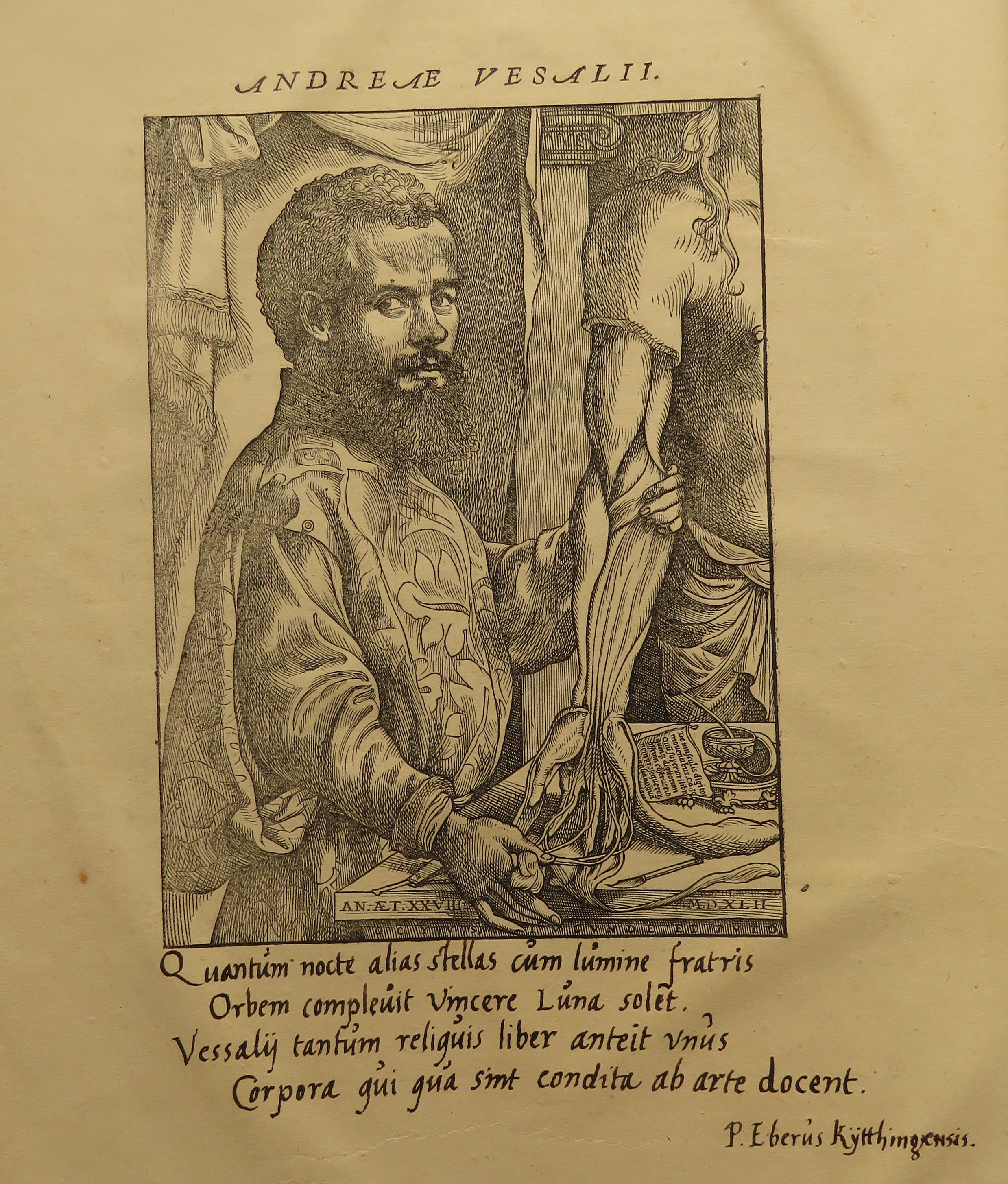
This article provides information on a copy of the 1543 edition of Andreas Vesalius’ De humani corporis fabrica, preserved at the Klimo Library of the University of Pécs. This copy helps us understand the complex reception of Andreas Vesalius’ groundbreaking anatomical work amongst Lutherans in the sixteenth century, and shows the importance of the University of Wittenberg, and Philipp Melanchthon, in shaping anatomical knowledge in Germanic lands. It also documents the tight connections between Wittenberg and the University of Padova, and reveals the continuing importance of Ancient learning for physicians working in the wake of the Vesalian revolution.
Letöltések
Hivatkozások
Belt, Elmer: Philipp Melanchthon’s Observations on the Human Body. Cleveland, magánkiadás, 1949.
Cazort, Mimi – Kornell, Monique – Roberts, K. B.: The Ingenious Machine of Nature: Four Centuries of Art and Anatomy. Ottawa, National Gallery of Canada, 1996.
Cunningham, Andrew: The Anatomical Renaissance: The Resurrection of the Anatomical Projects of the Ancients. Aldershot, Scolar Press, 1997.
Cunningham, Andrew: Melanchthon and Natural Philosophy. In: Medicine, Natural Philosophy and Religion in Post-Reformation Scandinavia. Eds. Grell, Ole Peter – Cunningham, Andrew. London, Routledge, 2017. 8–19.
Harcourt, Glenn: Andreas Vesalius and the Anatomy of Antique Sculpture. Representations, 17. (1987). 28–61. || [DOI] https://doi.org/10.2307/3043792 || [WoS] https://www.webofscience.com/wos/woscc/full-record/WOS:A1987G407600002
Henirichs, Erik A.: Plague, Print, and the Reformation: The German Reform of Healing, 1473–1573. New York, Routledge, 2017. || [DOI] https://doi.org/10.4324/9781315600697
Ittzés, Gábor: A Commentariustól a Liberig: Melanchthon a lélek halhatatlanságáról. Egyháztörténeti Szemle, 14. (2013). 46–67.
Kovács Sándor Iván: Régi magyar utazási irodalom, 15–18. század. Budapest, Szépirodalmi Könyvkiadó, 1990.
Kusukawa, Sachiko: The Transformation of Natural Philosophy: The Case of Philip Melanchthon. Cambridge, Cambridge University Press, 1995. || [DOI] https://doi.org/10.1017/CBO9780511598524
Kusukawa, Sachiko: Picturing the Book of Nature: Image, Text, and Argument in Sixteenth-Century Human Anatomy and Medical Botany. Chicago, University of Chicago Press, 2012. || [DOI] https://doi.org/10.7208/chicago/9780226465289.001.0001
Margócsy Dániel – Somos Márk – Joffe, Stephen N.: The Fabrica of Andreas Vesalius: A Worldwide Descriptive Census, Ownership, and Annotations of the 1543 and 1555 Editions. Leiden, Brill, 2018. || [DOI] https://doi.org/10.1163/9789004336308_009 || [WoS] https://www.webofscience.com/wos/woscc/full-record/WOS:000558786800008
Mcainsh, Andrew: Identification of Paul Eber as an Owner and Reader of Vesalius’ De humani corporis fabrica. The Library: The Transactions of the Bibliographical Society, 17. (2016). 446–450. || [DOI] https://doi.org/10.1163/9789004336308_009 || [WoS] https://www.webofscience.com/wos/woscc/full-record/WOS:000393042300004
North, Michael J. – Hartman, Laura: NLM’s Unique De fabrica. Circulating Now Blog. 2014. december 16. (https://circulatingnow.nlm.nih.gov/2014/12/16/nlms-unique-de-fabri-ca/) [2018.02.24]
Nutton, Vivian: Wittenberg Anatomy. In: Medicine and the Reformation. Eds. Grell, Ole P. – Cunningham, Andrew. London, Routledge, 1993.11–32.
O’Malley, Charles D.: Andreas Vesalius of Brussels, 1514–1564. Berkeley. University of California Press, 1964. || [DOI] https://doi.org/10.1525/9780520310230
Roth, Moritz. Andreas Vesalius Bruxellensis. Berlin, Georg Reimer, 1892. || [DOI] https://doi.org/10.1515/9783111504872
Schwarze, Rudolf: Jodocus Willich. In: Allgemeine Deutsche Biographie. XLIII. kötet. Hrsg. Historische Komission bei der bayerischen Akademia der Wissentschaften. München, 1898. 278–282.
Tóth Béla: Debrecen könyvtári kultúrája a XVIII. században. Magyar Könyvszemle, 97. (1981). 66–80.
Westman, Robert S.: The Melanchthon Circle, Rheticus, and the Wittenberg Interpretation of the Copernican Theory. Isis,66. (1975). 164–193. || [DOI] https://doi.org/10.1086/351431
Downloads
Megjelent
Hogyan kell idézni
Folyóirat szám
Rovat
License

This work is licensed under a Creative Commons Attribution-NonCommercial-NoDerivatives 4.0 International License.